Noted
They foresee the risk but carry on regardless.
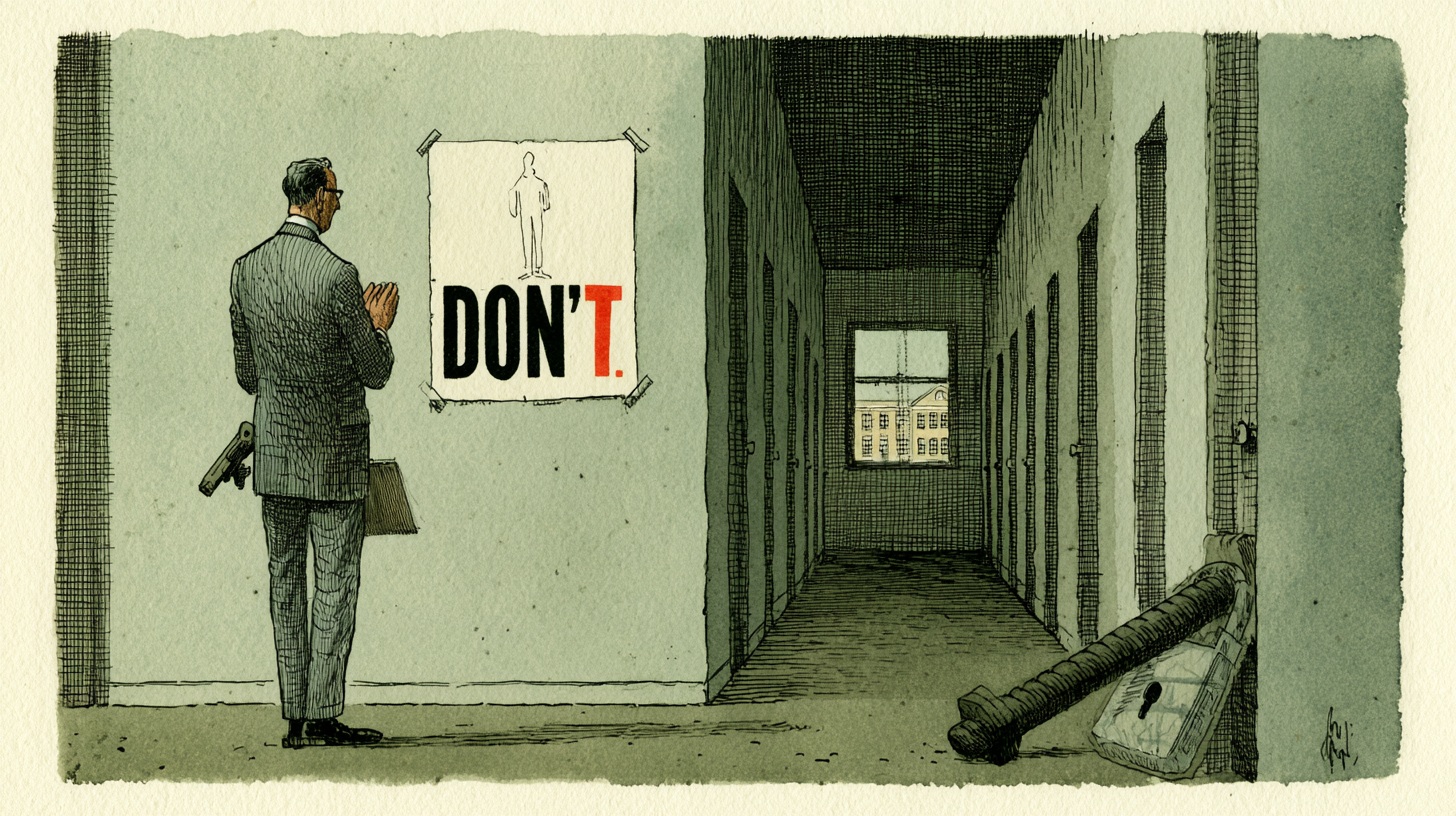
The Home Office has published a nine-page booklet for asylum seekers titled "Understanding behaviours and expectations in the UK". It explains that rape is a serious crime. That children under sixteen cannot consent, with no exceptions, even if they say yes, even if it is permitted elsewhere. That female genital mutilation is illegal. That you should not follow someone, block their path, or make kissing noises at them in the street.
Posters have been designed to accompany it.
The Prime Minister defended it, saying the government wanted to make UK law "explicitly clear".
Let us give the argument its due, because it is not worthless. If people arrive from places with different laws, telling them the law here is not in itself unreasonable, and a state is entitled to insist British law applies to everyone. Fine.
Now the question nobody in government has answered.
If you believe a leaflet is necessary — if the Home Office has genuinely concluded that a meaningful number of the men it is housing may not understand that rape is wrong — then you have already made a finding about risk. You have written it down. You have printed it and put it on a wall.
And having made that finding, the response is a pamphlet.
Not detention while identity and history are established. Not checks before a man is placed in a hotel beside a school. A booklet, a poster, and the hope that the man who needed telling reads it and takes it to heart.
Prevention is better than cure, and this is neither. It is paperwork. It is a document whose real function is not to change behaviour but to demonstrate, afterwards, that somebody was told. When the next case reaches court, the file will show the guidance was issued. The department will have covered itself. The girl will not have been covered by anything.
This is the same failure this paper has now written about four times in a month, wearing a different hat. In Epping a man in a hotel was convicted of sexual offences including against a fourteen-year-old girl. In Heywood a man refused asylum three times was arrested at a school with a hatchet and a can of petrol, and the judge criticised the Home Office over the state of his immigration status. Neither of those men needed a leaflet. They needed the state to have done something before, not to have explained something after.
People who arrive undocumented should be held securely prior to their removal. That is what most people assumed the system did, not hand them a 'don't do this' leaflet and stick a thousand of them on your street and hope for the best.
On accountability, one point that will be unpopular in Westminster and nowhere else. When a government identifies a risk in writing and responds with the cheapest available measure, that decision should belong to someone. Not a criminal charge — that is not how our law works, and pretending otherwise only lets ministers laugh it off. Something better: publish the advice ministers received, name the minister who signed off the response, and let both stand permanently against the outcomes that follow. No individual will ever be answerable for having thought it was enough. This needs to change sooner rather than later.
The state has told us, in its own words and at its own expense, that it believes some of the men it is accommodating may need to be told not to rape. They know their current course of action may lead to criminal offences being committed yet they carry on regardless. The test for recklessness in criminal law is for one to foresee that in their current course of action someone may be harmed and they unreasonably carry on regardless of that risk.
Everything else is commentary.
Get the next one
We publish the record with the reasoning attached. No spam, no tracking pixels, and you can leave in one click.